Ask which IPTV service is best and you will get twenty different names and no agreement. That is because the question has no single answer — and the people arguing about it are usually arguing about the wrong thing.
Whether an IPTV service works for you comes down to three things, and none of them is the brand name on the website:
- Your own internet connection — stable matters far more than fast.
- A premium service instead of a cheap panel — the price difference is server capacity, and capacity is the whole product.
- A server in your own region — the single thing most people never check, and the one that decides how the picture looks on a busy night.
Get those three right and almost any decent provider will work. Get the third one wrong and the best provider in the world will still freeze on you.
1. Your internet connection
Start here, because it is free to check and it rules out half the problems.
You need roughly 25 Mbps per stream for HD and 50 Mbps or more for 4K. If two people are watching different things, double it. Most modern connections clear that easily — which is exactly why speed is rarely the real problem.
Stability beats speed. A 30 Mbps line that holds steady gives a better picture than a 300 Mbps line that drops packets. And the most common cause of an unstable picture is not the provider at all: it is Wi-Fi. Walls, distance, neighbours on the same channel, a router in the hallway and a television two rooms away. A network cable from the router to the TV fixes more buffering than any other single change, and it costs a few dollars.
Test it properly: take your phone to where the television actually sits, connect to the same Wi-Fi, and run a speed test there. That number is the one your TV is working with — not the one you get standing next to the router.
2. A premium service, not a cheap panel
This is where most bad experiences begin. A five or ten dollar subscription is not a cheaper version of the same thing. It is a different thing.
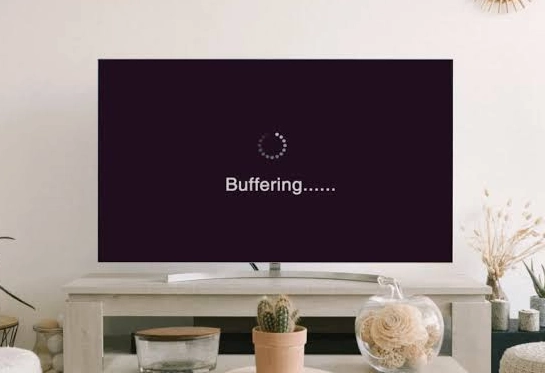
Servers are the expensive part of running IPTV. The only way to sell access for a few dollars a month is to put far more customers on each server than it can carry. On a quiet weekday afternoon nobody notices — there is plenty of spare capacity. Then a big match starts, everyone switches on at once, and the server runs out. That is why the complaint is always the same shape: it worked fine for weeks, then it froze during the one thing I actually wanted to watch.
A premium provider costs more because it keeps capacity sitting idle most of the time, so that it is there on the night you need it. You are not paying for more channels. You are paying for headroom.
Want all three, without the guesswork?
25,000+ live channels and 150,000+ films and series, on a server chosen for your region, with a written money-back window if it does not hold up.
View Packages3. A server in your own region
This is the one almost nobody checks, and it is the one that matters most.
When you buy IPTV, what you are really buying is a connection to a specific server. Every channel you open is a request that travels to that server and back. If it sits close to you, the trip is short and the picture is clean. If it sits on another continent, every request crosses several networks on the way, and any one of them can be congested at exactly the moment you are watching.
That is why the same provider can be excellent in one country and unwatchable in another. Nothing about the service changed. The distance did.
So the question to ask before you pay is not “is this provider good?” It is “where is the server I will be connected to?” A provider who cannot answer that is telling you something. We explained how this works in more detail in what a localized server actually is.
Why the same provider gets praised and trashed in the same thread
Once you understand the third point, the forum arguments stop being confusing.
One person says a provider is flawless. Two replies down, someone says it was unusable and they cancelled. Both are telling the truth. They were connected to different servers, on different continents, at different times of day. Neither of them is describing the service you would get.
That is the limit of any recommendation thread, and it is worth knowing before you spend an evening reading one. If you want to see the discussion anyway, it is on r/Streamen — just read it for patterns rather than for a name, because the names change every few months and the patterns do not.
What to check before you pay anybody
Whoever you buy from — us or somebody else — these five questions take about five minutes and will save you a refund request.
- Where are the servers? Ask before you pay, and expect a real answer.
- Will they reply at 9pm on a Sunday? Message support before you buy. Whatever speed you get as a prospect is the best you will ever get.
- Is the guarantee written, with a number of days on it? A vague promise is not a guarantee.
- Can you pay by card or PayPal? Both leave you a way back. Gift cards and crypto do not.
- Does it renew by itself? Know before you are charged, not after.
How to test in the first week
Most people test at the wrong moment and draw the wrong conclusion.
- Test in the evening, 7pm to 11pm, ideally at the weekend. That is when both your neighbourhood and the provider’s servers are busiest.
- Test your own channels, not whichever one happens to load first.
- Test on the television, not only on the phone — the phone is usually closer to the router and flatters the result.
- Test during something big. A match half the country is watching is the most honest stress test there is.
The honest answer
There is no single best IPTV service, and any page that gives you one name without asking where you live is guessing. There is a best service for your situation, and it is the one where your connection is stable, the provider is not overselling its servers, and the server you land on is close to you.
That is what we built ours around: regional servers instead of one shared pool, a written refund window, and somebody who answers when it is late and something has stopped working. Check those three things wherever you end up buying — they are what decides it.